

You book the trip for the beaches, the diving, maybe the bioluminescence if you've done your research. You come back talking about all of that. But there's something else that happens over the course of a week here that's harder to put into words and takes a few days back home to even notice.
Your nervous system just... resets.
The First Two Days Are Decompression
Most people arrive slightly wired. The flight, the ferry, the new place, the itinerary they've already half-planned in their head. The first day or two you're still in holiday-management mode — checking timings, figuring out where to eat, making sure you don't miss the sunset.
That's fine. It passes.
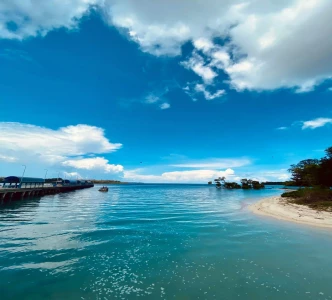
Somewhere around day two or three, something shifts. You stop reaching for your phone every twenty minutes. You start eating slower. You notice things — the specific sound the waves make at 7am, the way the light changes through the trees in the late afternoon, the fact that you've been sitting in the same spot for two hours and it didn't feel like two hours at all.
This is the islands doing what they do. Most people don't even realize it's happening until it's already happened.
What the Water Actually Does to You
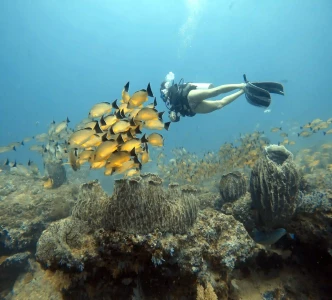
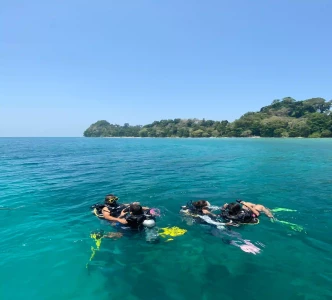
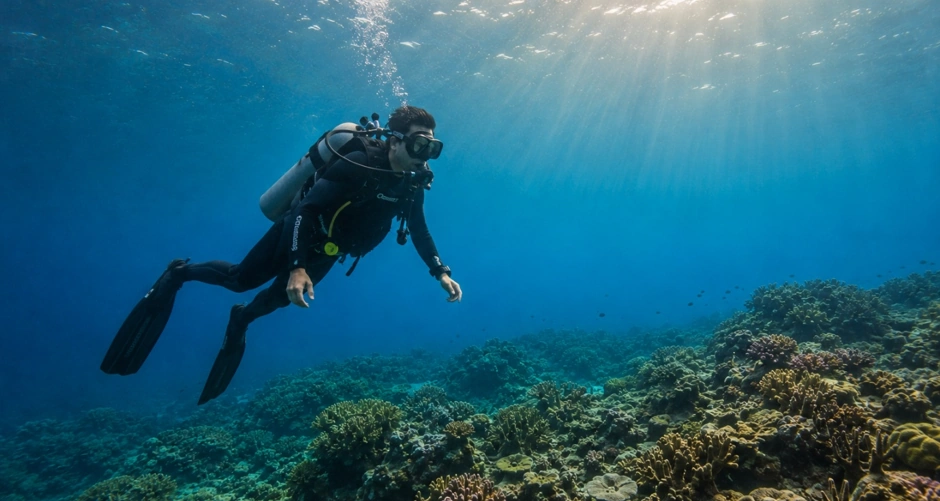
There's a reason every diver talks about the underwater world in a slightly evangelical way that annoys non-divers. It's not just that it's beautiful — it's that being underwater forces a specific quality of attention that almost nothing else does.
You can't scroll. You can't multitask. You can't half-listen while thinking about something else. There's just the reef, the fish, the sound of your own breathing, and the strange suspension of being weightless in a world that has nothing to do with anything waiting for you on the surface.
An hour underwater in the Andamans does something to your head that a meditation retreat charges a lot of money to attempt. And the reef here is good enough that you forget you're even trying to relax — you're just watching a turtle move through the water like it has nowhere to be and all the time in the world.
The Silence Gets Loud
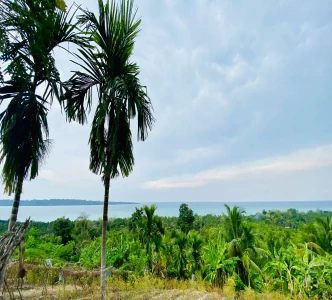
Havelock is not silent. The birds are genuinely noisy, the insects at night are extraordinary, and the ocean is always there in the background doing its thing.
But there's no traffic noise. No construction. No horns. No ambient city hum that you've been so used to you stopped hearing it years ago.
The absence of that specific kind of noise — the grinding, relentless, low-level noise of urban life — is something your body responds to before your brain even registers it. Your shoulders drop. Your jaw unclenches. You sleep in a way that feels different from home sleep, deeper and less negotiated, like your body finally got permission to fully switch off.
By day four, most people can't remember what they were stressed about before they got here. Not because the stress wasn't real — but because the distance from it, combined with what the island is actively doing to your nervous system, makes it genuinely hard to access.
The Pace Becomes Personal
The Andamans have one speed and it's not fast.
The ferries run when they run. The restaurant will bring your food when it's ready. The sunset doesn't care about your dinner reservation. And after a couple of days of bumping up against this and then realizing there's no point bumping up against it, something gives way.
You start moving at island pace. You walk slower. You make decisions more slowly. You stop filling silence with conversation for the sake of it. It feels strange for about half a day and then it feels completely natural, and then — this is the part nobody warns you about — it becomes the thing you miss most when you get home.
By the End, You're Not the Same Person Who Arrived
By the last day, most people don't want to leave. Not in the vague "I wish this could go on longer" way you feel at the end of any good holiday, but in a specific, slightly-panicked way that comes from knowing you've found a pace that actually suits you and you're about to go back to one that doesn't.
The ferry back to Port Blair feels abrupt. The flight home feels rude.
And then you're back. Same desk, same commute, same inbox. But something is slightly different — a recalibration that took a week to build and takes longer than you'd expect to fully fade. You're a little slower to react. A little quicker to notice when you're actually hungry versus just bored. A little less willing to treat your evenings like an extension of your workday.
That's what the Andamans do to your nervous system. It's not a holiday. It's a reset.
If you've been meaning to book this trip for a while, your nervous system is probably already asking you why you haven't. Click here and let's get it sorted.